Posts

NAFTA Conspiracies: All Smoke No Fire

Sorry, I have to do this. I use Google Alerts to keep up on NAFTA related news. A large portion of what I get relates to the impending merger of the U.S., Canada, and Mexico into a North American Union and the resultant loss of the American way of life. Go to YouTube and search for video relating to the Security and Prosperity Partnership of North America. Watch videos relating to the North American Union. You will find the shameful and shameless Lou Dobbs fomenting fear and resentment with a non-story relating to the loss of America to a European Union-style North American meta-nation. This is all supposed to happen before 2010. If you watch these videos and read the equally uninformed web sites and blogs decrying the NAU, one thing quickly becomes clear: although it seems very important to them, these people do not have the faintest idea what sovereignty means. That includes Lou Dobbs who uses a position of media power to whip up strong emotions in well meaning patriotic American...
Where is Mandatory AES?

International Trade Today, put out by Broker Power, Inc., ran an interesting piece on December 19 th in which Census sources indicated that the final rule on the mandatory use of the electronic Automated Export System (AES) for filing export documents remains a goal for the future. Census claims it will make a push for adoption of the electronic system in 2007 and will encourage large paper filers to make the switch voluntarily. More ominous, Broker Power reports that Census is going to begin "visits" to AES users. These visits will be used to determine the procedures in place at compliant companies and to "assist" those in need of compliance improvements. That assistance might include referral of violations to the relevant agency (i.e., Custsoms, BIS, or State). AES filing is something everyone will have to get used to--eventually. You may as well get started on a voluntary basis. At least look at the online training tools .

It's NAFTA Time: Free Gifts!

Here, have a NAFTA CO . The start of a new year is always exciting for the folks responsible for maintaining NAFTA compliance. Same goes for all the other new free trade agreements. That is because everyone is scrambling to get NAFTA certificates of origin from suppliers. Or, you might be one of those unfortunate people getting your arm twisted by a customer who wants a NAFTA CO yesterday. Here are a couple tips. At the end of this post, I'll give you a free tool to help. I promise. Tip Number 1: Tell Your Broker What is Going On Most NAFTA COs will expire December 31. If you are an importer who is used to claiming NAFTA status for your merchandise and don't have a replacement CO, you can't make the claim on January 1. Remember, NAFTA works on the assumption that you have a valid CO in your hand at the time of the claim. The other FTAs are a little different in this regard, but just go with me here. So, if you don't let your broker know that Acme Tools of Tijuana did no...

Pres. Signs GSP and other Trade Measures

So GSP survives for another 2 years with some new restrictions on Competitive Needs Limits. The restrictions are supposed to help the lesser developed of the beneficiary developing countries benefit from GSP as opposed to the larger economies like Brazil, India, and Thailand. One has to wonder how that is going to work. It seems more likely that if those countries lose GSP either for certain commodities or entirely, that trade will most likely shift to China rather than, say, Nepal, Columbia or Benin. I'll let my day job do the talking on this one: click here . Sorry for taking the lazy way out.

Bird Lovers Nabbed at Border

Update: I fixed this link so that it points to the relevant story. There is not much to say about this story . It is illegal to fail to declare merchandise entering the U.S. That includes live birds. And, if you go to Canada just to purchase 25 pounds of bird seed, expect to be searched.

Counterfeits in Court

An interesting case involving allegedly counterfeit goods came out of the CIT last week. The merchandise involved was PDA accessories including chargers and keyboards. Lots of goods issues were raised including one of my favorites: how is Customs supposed to determine the manufacturer's suggested retail price of counterfeit goods? Another issue was whether it is possible to counterfeit the "flying Windows" mark on a keyboard or--as plaintiff maintained--is using that mark protected "fair use" because it is effectively a requirement for all Windows based keyboards. Unfortunately, these meaty issues were not resolved because Judge Stanceu dismissed the case on procedural grounds. In summary, the Court found there was no valid protest of the exclusion of the merchandise. Thus, there was no jurisdiction under 1581(a). The Court also found no jurisdiction under 1581(i) because the restriction on the importation of counterfeit goods is not an embargo under 19 USC sec....

The Fruits of International Trade

Image
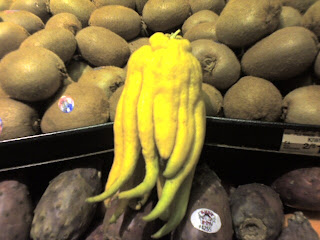
What the heck is this? It made its way to the produce department in my grocery store but it was not labeled. On top are kiwis; below are prickly pears. That ugly thing in the middle may or may not be edible. Whatever it is, I can almost guarantee that it is here as a result of international trade and I bet it passed through Customs.

Softwood Lumber Ends

Not with a bang, but with a whimper . Read about it via the CBC here . With a few more details, the story is this: The Coalition for Fair Lumber Imports had challenged the NAFTA Chapter 19 dispute resolution process as violating the U.S. Constitution. Unfortunately for this interesting claim, in October the U.S. and Canada entered into a settlement of the softwood lumber dispute. As a result, there was no controversy before the Court to decide and the Court dismissed the action as moot. You can read that here . Want to know why Chapter 19 might be unconstitutional? I have no idea what the parties to the actual case were arguing. But, I can tell you the argument most commonly raised. It has to do with the appointments clause of the Constitution. Article II, Section 2 gives the President the power to appoint "Judges of the supreme Court, and all other officers of the United States . . . ." This extends to all so-called Article III judges. Prior to NAFTA, antidumping...

Friday Travel

Image
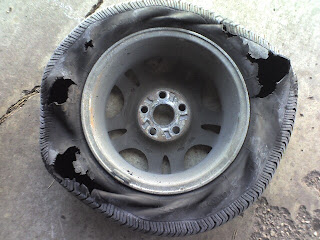
I was trying to post more regularly, and I will continue to do so. Today, I was traveling and not able to do it until now. At this point, I want nothing more than to vent and to invest in anyone working to perfect the Star Trek style transporter thus eliminating the need for cars and planes. It is cold here in Chicago. Thus, I was not at all happy when I found myself at 6:00 AM, in five degrees of cold, in the dark, on the side of the Edens Expressway (at Peterson for the locals), with a flat. I was headed to O'Hare to catch a 7:00 plane. This, it turns out, was not a pull-into-the-nearest-gas station-for-air-and-limp-to-the-airport kind of flat. No, it was a gaping-hole-in-the-sidewall, riding-on-the-rim kind of flat. I have no earthly idea what happened. There was no way I was driving on this thing. If I were either Starsky or Hutch, I would assume that someone shot out my rear wheel. Keep in mind, I was going to visit a client and was (as the client later put it), i...

Simon Says, Wait for a Release

Customs just announced beefed up penalties for taking your merchandise before it is officially released. That sounds like a crazy thing, but it happens. Usually, this is the fault of the carrier or broker trying to look like a hero by getting the goods to you. After all, it is not often that the importer actually shows up at the port to pick up the goods. The penalties are pretty substantial. Here is the gist of it (which are published in the guise of "mitigation guidelines"): A first violation may be mitigated upon payment of an amount equal to the lesser of: 1) 75% of the domestic value of the merchandise, removed or delivered without authorization and/or examination, or 2) a flat sum between $10,000 and $25,000, as determined at CBP ’s sole discretion. A second violation may be mitigated upon payment of an amount equal to the lesser of: 1) 75% of the domestic value of the merchandise, removed or delivered without authorization and/or examination, or 2) a flat sum betw...

Hello Moto

I am treading lightly. It turns out, people read this stuff. The last time I talked about sec. 1625 and the revocation or modification of rulings or treatments, I got chewed out (with some justification). But, here we go again. This time, I freely admit I am writing this not out of a disagreement with the judgment but because I had a hard time piecing together what happened. Maybe you did too. In Motorola, Inc. v. United States , (slip op. 06-165), the issue was whether 900 bypass entries or pre-classification rulings constitute "treatment" for purposes of 1625. If so, Customs should have engaged in the 1625 notice and comment process before issuing a ruling changing the classification in a way unfavorable to Motorola. The Court does a very thorough, well-reasoned analysis finding that bypass entries are not a treatment triggering section 1625. The regulations (19 CFR 177.12(c)(2)(ii)) state the following: The determination of whether the requisite treatment occurred will be ...

More Counterfeit News

Here is a link to another article on counterfeit enforcement. This really must be one of the hot issues in CBP these days. Oh, and a Happy Thanksgiving to all who care about such things.

CBP Makes Murder Arrest at the Border

I saw this story a few days ago and passed on blogging it. It came up in my automated Google Alert for CBP. Unfortunately, the first site on which I saw it reported was NSFW , if you know what I mean. Now, it is showing up in the news without illustrations. The story is simply that CBP arrested one Timothy Boham after he was questioned at the border in Arizona. Apparently, when questioned he volunteered that he was the subject of an arrest warrant in Denver for murder. Generally, that is an answer that will lead to your arrest. The reason the original link was NSFW is that Mr. Boham is an "actor" in gay pornography where he goes by the name Marcus Allen. Which, of course, makes me wonder whether this Marcus Allen has considered filing for trademark protection for his name.

More NAFTA Penalty Action

Apparently, it is not just Ford that has come under scrutiny from Customs and Border Protection for NAFTA certification. Here is the text of a press release that pretty much speaks for itself: WASHINGTON -- U.S. Customs and Border Protection in San Diego has reached a $10 million settlement with Pioneer Speakers, Inc. for violations of Nafta rules and record-keeping requirements. The settlements are in lieu of fines totaling more than $46 million that accrued against Pioneer in two unspecified years, according to a Customs press release. Customs said that Pioneer provided false claims for preferential treatment for speakers imported from Mexico. The speakers were assembled from parts made in another country, so do not qualify for Nafta duty preference. Pioneer also failed to keep proper records on the imports, Customs said. A million here, a million there, pretty soon these penalties get to be real money. Like so much else in this business, there has got to be an interesting story behi...

On the Watch for Counterfeits

Looking to pick up a fake Rolex on your next trip overseas ? Careful. Customs is looking for you. Well, really they are looking for larger quantities, but you get the point. Here is an article posted by the State Department on the increased international attention being paid to counterfeit merchandise. The article says that seizures have doubled since 2001. I am going to speak on this topic at John Marshall on Nov. 30. Here is the brochure . If you are smuggling, don't assume you won't come under suspicion just because you look like a respectable, non-threatening civilian. That's probably what 60-year old Carmen Grado Franco thought. At least up until she was busted at the port with almost 200 pounds of marijuana and a bit of cocaine.

WTO Appellate Decision on EU Uniformity

The USTR announced yesterday (11/14/2006) a WTO Appellate Body finding that the EU fails to administer uniformly its customs laws with respect to liquid crystal display monitors. While this might seems like a narrowly focused issue, it has broader ramifications. First, the decision reaffirms the important principle that the EU needs to have uniformity across its 25 member states. This should be true for all merchandise, not just the liquid crystal display monitors. Second, the Appellate Body also held that the original panel should have considered the broader question of EU uniformity rather than limiting it to the LCD display question. The full report and background is available here from the WTO . In the U.S., this is seen as an important step toward giving exporters a uniform set of rules in Europe and, therefore, reducing costs and other burdens in trade with EU members.

I'm Back

Image
It's odd that I feel bad when I don't post for a while. I try and post twice a week and to have at least one post on topic. When I travel, I find it harder to post and I have been on the road lately. Last Monday, I moderated the Administrative Procedure Act panel for the CIT Judicial Conference. From where I sat, it seemed like an interesting panel. Boiled down to its core, the conclusion is that the APA has no real role in CIT cases brought under 28 USC 1581(a)-(h) because those cases are either de novo or have a standard of review set in a different statute. But, the APA is directly implicated in 1581(i) cases. How the APA applies will depend on the nature of the case and the questions of both law and fact. It is clear, however, that more than just the "arbitrary and capricious" shorthand is applicable. From NY, I went to Miami for the ABA Section of International Law Fall Meeting. There was an excellent discussion there about "new" opportuni...

To The Yacht, Lovey

Customs and Border Protection has announced a new program to make it easier for pre -registered recreational boaters to return to the U.S. after visiting foreign ports. The program, called the Local Boater Option is only available in select ports from Tampa to the U.S. Virgin Islands. Pre -registered arriving vessels will only need to report in via phone. Everyone else has to arrange for the normal face-to-face screening. Seems like a good idea as long as the 2007 Terrorist Regatta is not in town.

More Laptop Customs News

On Monday, November 6, 2006 the previously unknown to me Association of Corporate Travel Executives issued a warning to its members about carrying laptops in international travel. The association is rightly concerned about the risks to corporations of having a laptop seized as evidence at the border and losing access to important corporate information. I've written on this before . At that time, though, I did not think of it in terms of corporate compliance. It is an issue. If one of your managers is traveling abroad with a computer containing sensitive information, your corporate policies should prohibit that person from storing any illegal or questionable information on the computer even temporarily (Customs and Border protection can look at deleted files, Internet caches, etc.). What you are worried about here is illegal information. There is no problem with your executives having a computer chock full of pictures of their kids and pets or the latest version Grand Theft Auto...

What Exactly is an Electronic Signature

Customs recently issued a ruling quite wisely stating that an electronic signature would be acceptable on a NAFTA certificate of origin. OK, fine. This is hardly newsworthy since copies of COs are acceptable. The interesting thing here is the distinction between a run of the mill electronic signature and a digital signature. The electronic signature at issue in the ruling was a bit map graphic of a handwritten signature. For all intents and purposes, it is the digital equivalent of a rubber stamp and ink pad signature. Don't get me wrong. I think the ruling is fine. There is no reason to require that a human being take a pen in hand and make his or her mark on the document to authenticate it. Customs correctly noted that the law has long recognized that anything placed upon a document with the intent that it signify that the person making mark agrees to the contents, is a signature. That is why illiterate people used to "make their mark" with an X on a document o...