Posts

Showing posts with the label Classification

eWriters and Protests

Image
When I saw that the Court of International Trade decision in Kent Displays  involves the classification of "a battery powered flexible eWriter device containing a pressure sensitive liquid crystal writing film," I had a moment of technology-geek excitement. That feeling stemmed from my personal conversion from yellow legal pads to a reMarkable "paper tablet." Before I wax on in an ode to the reMarkable, let's deal with this case. Kent Displays imported a product called the Dashboard, which it describes as a green replacement for paper. The device is based on a "bistable cholesteric reflective LCD."  This review is of a different product from Kent Displays, but probably gives a good idea of how the Dashboard works. Here is an image from Kent Displays of its Blackboard Smart Pen Reusable Notebook.  Kent had been importing this product under HTSUS item 9013.80.7000, which at the time of entry covered: Liquid crystal devices not constituting articles pro...

Crikey and Zut Alors, What is a Diary?

Image
For more than 20 years, I have had the privilege of organizing the Dominick L. DiCarlo – US Court of International Trade Lecture at the University of Illinois – Chicago Law School (FKA the John Marshall Law School). One of the great pleasures of this experience has been working with Court of International Trade judges who have graciously participated as keynote speakers. Last week, we presented the 22 nd edition during which I had the opportunity to interview the Honorable Jane A. Restani. In a discussion on the interpretation of the Harmonized Tariff Schedule, Judge Restani mentioned her recent decision in Blue Sky the Color of Imagination, LLC v. United States and asked whether I would post on the decision here. I had recently exchanged emails about the case and mistakenly thought I had already posted this. To ensure that I have not misled a judge or the audience at the event, here is that post. The question presented in this case was the classification of paper notebooks that ...

Precious Tritium

Image
One thing I have learned as a customs lawyer who does a lot of classification work is that there are millions of odd items moving in international trade the existence of which I am completely ignorant. Such is the case of the gaseous tritium light sources used in, among other things, firearm sights. These things use tritium sealed in a glass that has been coated in phosphor. The radioactive tritium decays, releasing beta particles, which interact with the phosphor causing it to emit light. In other words, it creates light with no external power source. Pretty cool.  Tritium is, of course, a real thing. It is an isotope of hydrogen. We know this from the excellent documentary "Spider-Man." This comes up in relation to the Court of International Trade decision in Trijicon, Inc. v. United States  in which the importer challenged the tariff classification of several versions of the gaseous tritium light sources ("GTLS"). The plaintiff uses them to make gun sights. The...

Counter-Counterclaim Decision

Image
This is a two-parter covering three decisions including  Second Nature Designs Ltd. v. United States . This part covers an interesting procedural question with implications for importers deciding whether to file a challenge to a customs decision in the Court of International Trade. In this case, that decision was the proper classification of decorative objects made from branches, wood, dried flowers, and other material. Customs classified these items in HTSUS item 0604.90.60 other foliage, branches and other parts of plants . . . dried . . . or otherwise prepared (7%). Plaintiff believes the merchandise is properly classifiable in 0604.90.30 covering the same merchandise except in "dried or bleached" form (free).  From Second Nature Designs This first decision does not resolve the classification. It goes to whether the United States properly asserted a counterclaim against the plaintiff. A counterclaim is a claim the defendant asserts against the plaintiff. Here, after Second...

Excavating Tariff Classifications

Image
A common error in tariff classification is to assume that some doodad used in or with a machine is necessarily classified as part of that machine. That is not always the case, which is why it is important to check the "relative" Chapter and Section Notes. For example, Section XVI, Note 2(a) states, that "Parts which are goods included in any of the headings of chapter 84 or 85 (other than headings 8409, 8431, 8448, 8466, 8473, 8487, 8503, 8522, 8529, 8538 and 8548) are in all cases to be classified in their respective headings . . . ." That means, for example, that a valve of Heading 8481 will usually be classified as a valve without regard to the machine into which it is assembled. The heading for the valve prevails over, for example, 8431, which covers "Parts suitable for use solely or principally with the machinery of headings 8425 to 8430." The latter including goods of Heading 8429, meaning "Self-propelled bulldozers, angledozers, graders, levele...

A Bowl of “Other”

Image
Tariff classification can sometimes produce surprising results. Such is the case with Nature’s Touch Frozen Foods v. United States , a recent decision of the U.S. Court of International Trade. The seemingly simple issue was the correct classification in the Harmonized Tariff Schedule of the United States of mixtures of frozen fruit and of frozen fruit with vegetables. The competing headings are, in relevant part, 0811 “Fruit and nuts . . . frozen” and 2106 “Food preparations not elsewhere specified or included.” Nature’s Touch argued for classification in 2106 on the grounds that the Heading 0811 does not encompass mixtures of fruits or of fruits and vegetables.  Heading 0813, for example, covers "Fruit, dried, other than that of headings 0801 to 0806;  mixtures  of nuts or dried fruits of this chapter." There is no similar indication in 0811. Moreover, plaintiff noted that the subheadings in 0811 also do not mention mixtures; they identify only individual fruits includ...

Revenge of the Hobgoblin

Image
UPDATE: A kind reader let me know I misattributed the quote. It is not from Thoreau as originally reported. Thanks for the feedback.  There is a saying, attributed to Ralph Waldo Emerson that “Foolish consistency is the hobgoblin of little minds.” The point of that seems to be that doing something the same way solely for the reason of maintaining consistency is a poor strategy. For trade compliance that is often true. The fact that a manager who retired from accounting in 1995 once said that none of your company’s tooling expenses are dutiable is not a solid reason for failing to report dutiable assists in 2023. Maybe in 1995 all the tooling was in the U.S., and it is now all over the globe. Consistency for the sake of consistency is not a good enough reason to maintain a compliance process. There should be some underlying reason to believe the process is legally correct. On the other hand, inexplicable inconsistency can be evidence of fraud. An ongoing penalty case in the Cour...

Fishy Classification

Image
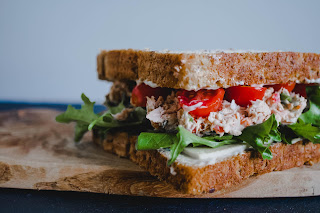
There is a saying among lawyers that a prosecutor can get a NY grand jury to indict a ham sandwich . Apparently, it is harder to classify a tuna sandwich, or at least the tuna in the sandwich. This deep thought relates to the dispute between U.S. Customs and Border Protection and StarKist Co. over the tariff classification of tuna salad imported ready-to-eat in pouches. We first addressed this debate in the post  No Mincing Words on Tuna Classification (customslaw.blogspot.com) . After being caught, the tuna is processed in Ecuador where it is cooked, machine chopped, then hand-folded with a mayonnaise base comprising more than 12% soybean oil. Customs classified the prepared tuna in HTSUS item 1604.14.10 as Prepared or preserved fish; Tunas; In airtight containers: In oil, which carries a duty rate of 35%. The importer argued that the proper classification is in three alternative tariff items: 1604.20.05 (10%), which covers minced fish prepared or preserved including "product...

Warehousing May Be "Use"

Would you buy a "used" swimsuit? The answer to that question probably depends on exactly what "used" means. In at least one narrow application of the term, the Court of International Trade has determined that a swimsuit is "used" when it is stored in a warehouse, entered into inventory, picked off the shelf for packing, and shipped to a customer. This comes from SGS Sports Inc. v. United States , a recent decision from the CIT. The issue came up in the context of swimwear that was imported into the United States and then sent to a warehouse in Canada to be held in inventory until sold. Upon its return to the U.S., the importer asserted that the goods were entitled to duty free entry under HTSUS item 9801.00.2000, which covers: Articles, previously imported, with respect to which the duty was paid upon such previous importation . . .  if (1) reimported, without having been advanced in value or improved in condition by any process of manufacture or other mea...

Printed Foil is not Printed Matter

Image
What is the correct tariff classification for an aluminum foil laminated with plastic that is used as packaging material for pharmaceutical products and medical devices? More to the point of Amcord Flexibles Kreuzlingen v. United States , does it matter if there are words printed on the material? The merchandise at issue in this case looks like this: The Court of International Trade previously addressed the classification of this material without the printing  in a case called Amcor Flexibles Singen Gmbh v. United States . In that case, the Court determined that the flexible aluminum foil and plastic material was properly classified in Heading 7607 as a product of aluminum.  The new question presented to the Court is whether the same material, when printed, is transformed into "printed matter" of Heading 4911. If your first reaction to that theory is "come on, that's crazy," just remember that the difference between paper "of a kind used for printing" ...

CIT: Tools of Trade Are Not for Sale

This is the last post covering cases from 2021. I can't say I am sad about seeing the end of 2021. Thank you all for reading my posts here and following me on  Twitter . Here’s hoping all of you have a happy, safe, and professionally satisfying new year.  The case of the day is  Porsche Motorsport North America, Inc. v. United States , in which the plaintiff sought to secure duty-free entry for certain merchandise under HTSUS item 9801.00.85, which covers “[p]rofessional books, implements, instruments, and tools of trade, occupation, or employment, when returned to the United States after having been exported for use temporarily abroad, if imported by or for the account of the person who exported such items.” The items in question were vehicle parts exported from the U.S. to Canada by Porsche in a trailer to be stationed at Porsche team racing events in Canada. According to Porsche, it exported the trailer to "promote the Porsche brand" by providing parts to participants ...

The "Treatment" of Bicycle Seats

The Court of Appeals for the Federal Circuit has pedaled into the controversy over the classification of children's bicycle seats. In this context, that means extra seats that can be attached to a bicycle to carry a child as a passenger, as opposed to seats (or "saddles" for children's bicycles). The underlying dispute is whether such seats are classifiable as seats of Heading 9401 (duty free) or as bicycle accessories of 8714.99.8000, which are subject to a 10% rate of duty. The CAFC opinion in Kent International, Inc. v. United States is, however, not about the classification itself. Rather, it is about what to make of Customs' handling of entries of this merchandise and whether that handling constitutes a legally enforceable "treatment." Kent, it appears, is an importer trying to do this right. In 2005 it received a binding ruling from CBP stating that the seats should be classified as bike accessories in Heading 8714. After that, including between A...