Posts

Showing posts with the label Trade law

Vance Writing Competition

Andy Vance was a legendary figure in customs law and litigation. After a career at the Justice Department, he joined Barnes, Richardson & Colburn as a partner in the NY office. Sadly, I just missed the opportunity to work with him. The CITBA writing competition named in his honor is a great opportunity for J.D. and LL.M. students to demonstrate their interest in and knowledge of customs and international trade law. Plus, there is a monetary prize. Papers are due in June 2. See the details below. 2024-2025 Andrew P. Vance Memorial Writing Competition Call for Papers Wednesday, January 29, 2025   | Posted by CITBA Staff The Customs and International Trade Bar Association (CITBA) and Georgetown Law School are pleased to announce 2024-2025 Andrew P. Vance Memorial writing Competition. The competition is welcoming papers with an in-depth analysis of a current issue relevant to customs and international trade law. Entrants must be currently enrolled in a J.D. or L.L.M. program at any...

Liquidation Un-Deemed by CIT

Image
What happens when Customs decides that an entry was "deemed liquidated" while the entry is suspended by the Commerce Department? Apparently, nothing. That is the gist of the decision in Fraserview Remanufacturing Inc. v. United States , a (relatively) recent decision from the Court of International Trade.  The facts of this case are a bit complicated. The imported merchandise was softwood lumber from Canada, which is subject to an antidumping and countervailing duty order. As part of the administrative process, on March 19, 2020, Commerce ordered that CBP suspend the liquidation of the 80 entries subject to this case. Customs, however, mistakenly scheduled the entries for manual liquidation. Inexplicably, Customs, citing "system errors," failed to actually liquidate them. After noticing the failed (and incorrect) effort to liquidate the entries, CBP marked the entries as having been deemed liquidated by operation of law on August 7, 2020.  "Deemed liquidation...

Ellwood City Blues

Despite being judicial review of agency action, principles of administrative law do not always apply to customs law. That is because most decisions by Customs and Border Protection affecting the importation of merchandise are subject to administrative review in the protest process and then judicial review on a de novo standard. That means the judge will make a decision based on the evidence presented to the court rather than the administrative record on which the agency based its decision.  For comparison, in a trade case, the court will uphold a Commerce Department dumping margin calculation as long as the decision is based on substantial evidence in the record  and is otherwise in accordance with law. That means the agency can prevail even if the court would have reached a contrary conclusion. That is the opposite of, for example, a tariff classification case in which the court is required to reach the correct result based on the evidence before it with little regard for Cus...

Target on Finality

Image
In the last post , about the Federal Circuit’s very important decision on due process and allegations of evasion of antidumping duties, I made a snarky, offhand comment that the government believes “liquidation is magic.” That was in the context of the government arguing that Customs’ liquidation of entries mooted an appeal, thereby taking away the importer’s right to further judicial review. I said that knowing full well that I still needed to write this post summarizing Target Corp. v. United States in which Target made what I want to be a valid and righteous argument that Customs’ improper liquidation of entries at a favorable rate of antidumping duty prevents the Court of International Trade from ordering Customs to collect the legally applicable duties. But it turns out that while liquidation is an important legal step, in at least one unusual circumstance it is not sufficiently powerful to overcome the full force of an Article III court. Understanding this case requires a lot ...

Acquisition 362 and Protests of Countervailing Duties

Image
Welcome back to what I hope is a more consistent flow of updates. I have a couple in the hopper, so come back soon. Importers of goods subject to antidumping and countervailing duties often find themselves dealing with unexpected compliance issues. Acquisition 362, LLC v. United States , a recent decision from the Court of Appeals for the Federal Circuit, is a good example of how this can go sideways.  Aquisition is an importer of tires from China that are subject to a countervailing duty order. As a result, Acquisition deposited CV duties at the rate of 30.61%, which was the rate applicable to tires from "all-other" producers and exporters at the time of entry. When Commerce instituted a review of the deposit rate, it instructed Customs to continue to suspend the liquidation of entries from companies participating in the review, including a company known as Shandong Zhongyi, which was Aquisition's nominal suppler.  Unfortunately for Aquisition, Shandong withdrew from the...

The Mysterious Domestic Party Petition

We sometimes hear from a domestic party that someone is allegedly importing merchandise using an incorrect tariff classification or understating value in a way that both violates the law and creates an unfair commercial advantage for the importer. Often, the domestic party has spent considerable time and effort securing an order imposing antidumping or countervailing duties and has reason to believe someone is improperly avoiding the payment of those duties. The question is what tools exist to allow that domestic producer to ensure the law is being properly enforced and also to offset the unfair advantage.  One thought that often comes up is the Domestic Interested Party Petition under 19 USC § 1516 , which is a little used but potentially useful tool. But, as we will see, it has limitations. This section of the customs law allows an "interested party" to submit a written request for Customs to furnish to it the classification and rate of duty imposed on "designated impo...

TR International: Burdens and Remedies in Scope Case

Image
Country of origin continues to be in the spotlight as Customs & Border Protection exercises its enforcement authority for Section 301 duties on products from China and also on products subject to antidumping and countervailing duties. A lot of the discussion has been around China and what needs to be done to a product to legally establish another country as the origin. This is useful to avoid the up to 25% duties imposed on these products. But, the same considerations apply in the antidumping and countervailing duty context except that the stakes can be much, MUCH greater. It is not uncommon to see deposit rates and assessments rates in excess of 100%. In one case, as much as 1300% (I'm look at you, mattresses). The recent Court of International Trade case TR International Trading Company v. United States , looked like a vehicle to address some of these cases but ended up focusing more on CIT practice than on origin. The case involves citric acid imported from India, where it...

Federal Circuit Finds Section 232 is Constitutional, What Next?

On February 28, 2020, the U.S. Court of Appeals for the Federal Circuit denied a challenge to the constitutionality of Section 232 and the currently applicable duties on steel and aluminum products. The case, American Institute for International Steel  v. United States, was brought by a coalition of steel importers and  is available here . You may recall that AIIS tried to skip the Court of Appeals and move directly from the Court of International Trade to the Supreme Court. The reasoning behind that effort was that the Federal Circuit would likely find itself bound by a prior Supreme Court decision on the same issue. That case was Federal Energy Administration v. Algonquin SNG, Inc. In Algonquin, the Supreme Court addressed whether President Nixon had the authority under Section 232 to impose license fees on imported oil. Plaintiff's in the case argued that the statute was an improper delegation of authority from Congress, which has the constitutional power to regulate in...

CAFC Gives CBP Suspension Authority for Ambiguous Orders

Image
When an imported product is potentially subject to antidumping or countervailing duties, there has long been a tension between the roles of U.S. Customs and Border Protection and the Commerce Department in making the final decision of whether CBP should collect duty deposits. On the one hand, CBP is right there at the port and is the agency responsible for revenue collection. On the other hand, Commerce has the technical expertise in the dumping laws and drafted the scope description for the investigation and the order (with input from interested parties). Sunpreme, an importer of solar modules, has been engaged in a long-running dispute over the whether its imports are within the scope of an order on U.S. imports of certain solar cells from the People’s Republic of China. I'm not going to focus on the scope question here. For customs lawyers, the more interesting question is which agency gets to make the scope decision and how that impacts the process of importation. In Sunp...

CIT Upholds Constitutionality of 232 Duties

Here is a quick take on the decision of the Court of International Trade in American Institute for International Steel v. United States . This is the case challenging the constitutionality of Section 232, under which President Trump imposed duties on steel and aluminum products in furtherance of national security. Plaintiff's theory of the case is that the statute is facially unconstitutional because it violates the constitutional requirement for separation of powers. The starting point for this that Congress, not the President has the power to regulate trade. In Section 232, Congress delegated some of that power to the President so that he may make adjustments to trade to protect the national security. AIIS argued that the powers given to the President are unbounded by an "intelligible principle," meaning he can exercise legislative powers that are reserved to Congress. That would be unconstitutional. If, on the other hand, the President can only act within a define...

For Scope, An Assembly is Not a Set

Image
MacLean Power LLC v. United States sets right a very troubling scope decision from the Department of Commerce concerning helical spring lock washers ("HSLW") from China. The scope of that order is here . MacLean makes assembled pole line hardware used for building electrical transmission and distribution substations. Pole line hardware consists of various configurations of products. You can get a feel for the range of these products at the company's website . What is important to know is that MacLean imported complete assemblies. Some of these assembled items include HSLW from China. For some reason, MacLean felt it was wise to ask the Department of Commerce for a scope ruling to confirm that the HSLW integrated into these assemblies were outside the scope of the corresponding order. It is possible an inquiry from Customs and Border Protection prompted the ruling request. It is also possible that MacLean was just being cautious. Either way, the result was not good. ...

What to Take from 2018: Suppliers Lie

This is part 2 of the Univar discussion. For the evidence issues, see part 1 . If you know me or have ever heard me speak about customs penalty cases, you may know that I am forever frustrated by the disconnect between exporter dishonestly and importer liability. In my personal view, there are many cases in which a naïve or careless importer is left holding the penalty bag when an unscrupulous exporter lies about the true nature of the product or the relevant law. How many times does an importer need to ask the exporter to confirm the country of origin, composition, or other relevant fact before the importer can legally rely on those representations? In an age of on-line e-commerce transactions in which seller and buyer may never meet IRL, what is the responsibility of the importer? Those are rhetorical questions because the law is clear on this. My frustration with the law is real, not rhetorical. Let’s look at the facts of United States v. Univar USA, Inc. (Slip Op. 18-157) to ...

OMG, a Dispatch from the Benelux

Image
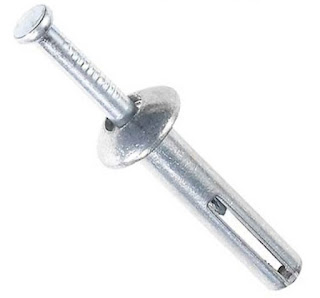
Antwerp is a lovely city in which to spend a few days talking about trade law, European privacy regulations, and eating everything in sight. There were also more than a few Belgian beers involved. I am now on a train from Antwerp to Amsterdam. On the way, I figured I would read OMG, Inc. v. United States . "Why?," you might reasonably ask. [Is that remotely the correct way to punctuate that sentence?] Well, it is what I do for you. Despite the caption, OMG is not about internet-age acronyms. Nor is it about products intended for teenage girls in poorly written CW dramas. [Note: I don't actually know that teenage girls on CW dramas ever say "OMG," but I feel like they might.] Rather, it is about the scope of the antidumping duty order on steel nails from Vietnam. The scope of that order states, in part: The merchandise covered by the Orders is certain steel nails having a nominal shaft length not exceeding 12 inches.  Certain steel nails include, but...