Posts

Showing posts with the label Food

A Bowl of “Other”

Image
Tariff classification can sometimes produce surprising results. Such is the case with Nature’s Touch Frozen Foods v. United States , a recent decision of the U.S. Court of International Trade. The seemingly simple issue was the correct classification in the Harmonized Tariff Schedule of the United States of mixtures of frozen fruit and of frozen fruit with vegetables. The competing headings are, in relevant part, 0811 “Fruit and nuts . . . frozen” and 2106 “Food preparations not elsewhere specified or included.” Nature’s Touch argued for classification in 2106 on the grounds that the Heading 0811 does not encompass mixtures of fruits or of fruits and vegetables.  Heading 0813, for example, covers "Fruit, dried, other than that of headings 0801 to 0806;  mixtures  of nuts or dried fruits of this chapter." There is no similar indication in 0811. Moreover, plaintiff noted that the subheadings in 0811 also do not mention mixtures; they identify only individual fruits includ...
Fishy Classification

Image
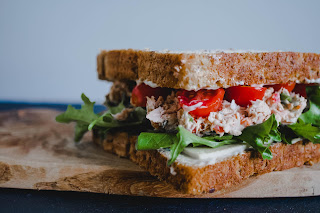
There is a saying among lawyers that a prosecutor can get a NY grand jury to indict a ham sandwich . Apparently, it is harder to classify a tuna sandwich, or at least the tuna in the sandwich. This deep thought relates to the dispute between U.S. Customs and Border Protection and StarKist Co. over the tariff classification of tuna salad imported ready-to-eat in pouches. We first addressed this debate in the post  No Mincing Words on Tuna Classification (customslaw.blogspot.com) . After being caught, the tuna is processed in Ecuador where it is cooked, machine chopped, then hand-folded with a mayonnaise base comprising more than 12% soybean oil. Customs classified the prepared tuna in HTSUS item 1604.14.10 as Prepared or preserved fish; Tunas; In airtight containers: In oil, which carries a duty rate of 35%. The importer argued that the proper classification is in three alternative tariff items: 1604.20.05 (10%), which covers minced fish prepared or preserved including "product...

CIT Denies Domestics Intervention in 232 Case

 The ongoing litigation over whether the Section 232 duties were properly extended to cover certain downstream products of steel and aluminum took an interesting detour in Slip Opinion 21-6 , which covers multiple related cases with the lead case being Primesource Building Products v. United States. This opinion addresses the effort by the American Steel Nail Coalition to intervene in the case as a defendant in support of the United States and the continued application of the duties to imported steel nails. The Coalition is an ad hoc group that is not a formal entity as would be, for example, a trade association organized as an entity under state and federal law. Essentially, the Coalition wants a seat at the table in this litigation to protect its own economic interest in the continuation of the tariffs. Intervention is permitted in federal courts like the Court of International Trade either by right or by leave of the Court. Take a look at CIT Rule 24 for the details. To have a ...

No Mincing Words on Tuna Classification

 As mentioned in my last post, tariff classification is all about giving every word of the relevant heading, subheading, and tariff item its proper meaning. We do that by looking for definitions in the Section and Chapter Notes, commentary in the Explanatory Notes, and prior court decisions. In Starkist Co. v. United States , the first word in question was " minced ." The imported merchandise was prepared tuna fish salad. The tuna was classifiable in Heading 1604, which covers, among other things, prepared or preserved fish. Immediately under Heading 1604 is a subheading dividing the heading into "Fish, in whole or in pieces, but not minced" versus "Other prepared or preserved fish." Customs determined that the tuna in question was not mined and was packed in oil. As a result, the merchandise was subject to a 35% base rate of duty under 1604.14.10. Plaintiff argued that the tuna was minced and not packed in oil, making it classifiable as a prepared meal of...

Ruling of the Week: Rice Krispies Treats

I had a long run of covering at least one CBP ruling every week. I enjoyed doing that as it allowed me to find an odd ruling and use it as a tool to illustrate some point. That fell by the wayside, mainly because of the time commitment it takes to do actual work and also write other content for the blog. On the other hand, I kind of miss it. Others have tried to fill that space. I am looking at you, Crowell & Moring.  Today, I am inspired to jump back in. That inspiration came in the form of the printed New York Times. In today's Science Times, there was an interesting and entertaining discussion of whether a reasonably functional traffic barrier could be made of Rice Krispies Treats. In the course of that discussion , the author quotes Customs & Border Protection for what seems to be an "official" description of a Rice Krispies Treat. According to the Article: "[T]he Tariff Classification and Marking Branch, a part of U.S. Customs and Border Protection, desc...

Tapenade Redeption

In 2016, I had fun participating in a mock oral argument on the classification of a loose mixture of chopped olives. The facts of that case were modeled on a ruling concerning the classification of olive tapenade and artichoke tapenade. See my discussion of that here . In the High Court of ICPA, I lost to a jury of my peers, which remains to this day a shocking stain on my record. I suspect the entirely fake judge was terribly biased. Today, I have renewed confidence thanks to a decision of the U.S. Court of International Trade in Mondiv v. United States , in which the CIT found for the plaintiff that the merchandise is, in fact, sauce or a sauce preparation. Despite my joy, I feel terrible physically and will make this quick. Both products are prima facie classifiable in HTSUS Heading 2005, where CBP classified them as "Other vegetables prepared or preserved otherwise than by vinegar or acetic acid, not frozen, other than products of heading 2006." But, it also t...

How the Sausage Casing is Made

Continuing my effort to catch up on 2017 customs decision from the Court of International Trade, we come to Kalle USA, Inc. v. United States. For lots of reasons, I am going to treat this carefully. First and foremost, this is a case litigated by my law firm. As far as I know, this is not final, and I will not say anything about the matter that is not consistent with the position we advanced in the CIT. On top of that, I have a case pending before the Court that raises similar issues. Therefore, this post is just the facts and just the conclusions of law. Kalle imports lay-flat tubes that are layers of plastic and textile materials. The long edge of the tube is sealed with glue. These tubes are used as casings for sausages and sometimes cheese. There are two versions of the casing at issue. For the majority of the merchandise, the textile is about 140 micrometers compared to 20 micrometers for the plastic. The textile value is € 0.96/165 cm compared to € 0.73/165 cm for the plastic. ...

Sunflower Seeds

Image
I am falling behind on Rulings of the Week, but not for want of effort. I am keeping up with CIT decisions (more or less). The latest of which is Well Luck Co., Inc. v. United States . The case has to do with the classification of sunflower seeds that have been processed for human consumption. Some have been flavored with spices or other flavorings and dried. All are roasted and salted. The question is the tariff classification, which turns out to be trickier than you think. The options are HTSUS item 1206.00.00, which covers "Sunflower seeds, whether or not broken." The applicable rate of duty is free and this is what the plaintiff claimed is correct. Customs and Border Protection liquidated the sunflower seeds in HTSUS item 2008.19.90 as "Fruits, nuts and other edible parts of plants, otherwise prepared or preserved . . . not elsewhere specified or included: Nuts, peanuts (ground-nuts) and other seeds . . . ." The applicable rate of duty is 17.9%, which is a sig...

Ruling of the Week 2017.1: Geeks Will Eat Anything

Image
It is a new year and a lot has changed in the world. People in my field are either excited about the possibilities of major changes in trade policy or are horrified by the possibilities of major changes in trade policy. I have had several calls about whether the U.S. will withdraw from NAFTA, impose new duties on goods made in Mexico by U.S.-based companies, and raise tariffs on goods from China. My answer so far has been, "I wish I knew." The new President and the new Congress will have a lot of authority under domestic law. The bigger questions will relate to how our trading partners respond. The U.S. has agreed many times to hold or lower duties. Going back on those promises will mean violating WTO obligations and multiple free trade agreements. Some people may not care. The U.S. remains fully sovereign and can violate any international agreements it choses. As a former partner used to say, "The WTO has no army." But, the WTO has the ability to authorize trad...

Is that a Pine Nut?

Image
I watch competitive cooking the way a stereotypical American male might watch baseball. I don't care if it is Top Chef or Chopped at the high end or the dreck that is Cupcake Wars and The Great American Food Truck Race. I don't watch kids compete, that's where I draw the line. I also like to eat. As a result, I am familiar with a lot of strange food items. Pine nuts are not all that odd. I recently learned a lot more about pine nuts when I read Specialty Commodities Inc. v. United States , which involves the tariff classification of the seed of the Korean pine nut, Pinus koraiensis. Customs and Border Protection classified these seeds as "Other nuts, fresh or dried, whether or not shelled or peeled: Other: Other: Shelled: Other" in HTSUS item 0802.90.97. The plaintiff believes they are best classified in 0802.90.25 as "Pignolia: Shelled." Clearly, the question is whether the seed of the Koreas pine, from China, is a "Pignolia" for purpose...

Ruling of the Week 2016.13: Kimera Koffee

If you have been around here long enough, you know I am a skeptical guy. I believe the consensus of medical science is in a better position than the guy at the supplement store to give medical advice. I also believe that eating or drinking something with the intention of modifying the way your body works is a medical decision whether you are taking a prescription drug or a "natural" supplement. I suspect the prescription drug has a better chance of actually working as advertised than does the supplement, but both are drugs. With that in mind, I read HQ H268556 (Dec. 15, 2015), which considers the tariff classification of Kimera Koffee . This particular product is about 95% coffee, but it has been "boosted" with taurine, alpha GPC 50%, L-theanine, and DMAE (Deanol). As  result, the coffee is advertised as enhancing cognitive performance, boosting energy levels, improving focus and concentration, and enhancing athletic performance. The additives are a class of pr...

Ruling of the Week 2016.4: Curtis Stone's Chop Chop

Image
Here is something you may not know about me . . . I watch competitive cooking shows the way a normal guy watches baseball. As far as I am concerned, Alton Brown is the Kenesaw Mountain Landis of cooking and Ted Allen is its Howard Cosell . Consequently, when a ruling ( HQ H266149 (Oct. 21, 2015) ) from Customs and Border Protection invokes the name of Curtis Stone , I pay attention. In this case, the question was the tariff classification of "the Curtis Stone Chop Chop Deluxe Food Chopper." Exhibit A: I suspect someone at Customs is a fan because the sentence "Curtis Stone is a celebrity chef from Australia," is irrelevant to the issue. It is, however, a true statement. As you can tell from the picture, this is a hand powered chopper with interchangeable blades. The top handle presses down, pushing the food item through the blade and into the receiving container. Simple. The goods entered the United States classified in 8205.51.30 (3.7%) as handtools ...