Posts

Showing posts with the label Marking

Procurement, Origin, and Perspective

The Court of Appeals for the Federal Circuit decided an appeal from the Court of Federal Claims that may have a significant impact on origin determinations by Customs and Border Protection as well as future cases from the Court of International Trade. The case is Acetris Health LLC v. United States .  As background, the Court of Federal Claims is a federal court set up by Congress to hear claims by private parties against the United States in cases that might result in money damages. The Court can grant equitable relief in government contract bid protests and has jurisdiction over the vaccine claims process (which is a whole other story). Acetris is a bid protest case. The VA had been purchasing medicines from Acetris for some time. The drugs are produced in a facility in NJ that compounds the ingredients and then forms the material into pills of proper dosage. The active ingredients are made in India. The VA asked Acetris for confirmation that it was in compliance with the ...

Ruling of the Week 2016.22: Framing Substantrial Transformation

Image
I like bikes. Lately, that is more in theory than in actual usage, but that is my fault. In reality, bikes are a transformative technology. They give kids their first sense of independence. They give everyone a means of transportation with zero carbon emissions. In some cases, the availability of that transportation may be lifesaving . Thus, when I see something at work that involves bicycles, I usually take note. Such is the case with the September 21, 2016 Customs Bulleting and Decisions in which Customs and Border Protection revoked a ruling, N269994 (Nov. 20, 2015), on the country of origin of bicycles. The bicycle in question is assembled in the United States from imported components, including frames. Customs had previously ruled that assembling components to a U.S.-origin frame produces a bike with the U.S. as the country of origin. In N269994, it apparently misapplied that same analysis to find the U.S. to be the country of origin of bicycles with imported frames. In...

Troll Update

I'm Larry Friedman. You may remember me from such blog posts as  Customs Trolls and the False Claims Act . In that post, we talked about the case brought by a company called Customs Fraud Investigations LLC alleging that Victaulic Company had avoided the payment of marking duties by making false statements to Customs and Border Protection. At the time of the first post, the United States District Court for the Eastern District of Pennsylvania dismissed the case as failing to state a cause of action. The Court subsequently refused CFI's motion to amend its complaint in an effort to correct the deficiency. The Court of Appeals for the Third Circuit has now reversed the District Court and sent the case back down for further proceedings. The case was brought under the False Claims Act.  This law was passed after the Civil War as a means of ensuring that the government was not paying out on fraudulent claims. In a typical FCA case, the "relator" alleges that someone su...

Ruling of the Week 2016.10: Share-A-Dram and NAFTA Marking

I've been at this a long time. Nevertheless, I am still sometimes surprised. That happened when I read N272495 (Mar. 1, 2016) . There are two "travel kits" at issue in this ruling. These are travel kits of the kind used by Victorian gentlemen tromping around the Amazon or Africa trailing a line of porters carrying their necessities. In this case, the necessities include six glass bottles with caps, two pipets, a funnel, coasters, a whisky taking journal, some other stuff, and a leather case for all of it. There is also a Share-A-Dram kit consisting of 12 glass bottles, a funnel, paper neck tags, and sample tasting ledger. Customs and Border Protection decided that these kits are to be classified as retail sets based on the single item that imparts their essential character. For the travel kits and the Share-A-Dram, that is the glassware, specifically the drinking glasses, which are the most expensive glass items. Here's the more interesting point. The drinking g...

Ruling of the Week 2015.22: Beam Me Up

Image
I see we are close to perfecting the Star Fleet-style impulse engine . It also appears that we are working on teleportation , one atom at a time. That got me wondering what Star Trek inspired devices might have been the subject of a Customs classification ruling. What I found is the Star Trek Flash Badge imported by the Kellogg Company to be included as a prize in boxes of cereal. The plastic badges mimic the Star Fleet divisional insignia for Command, Engineering and Science plus insignia of the Klingon and Romulan Empires. Each badge contains a battery. switch and an LED. When the switch is depressed, the LED lights, illuminating the badge. According to Customs, the badges could not be worn and lacked any kind of pin to connect it to a uniform. Customs also noted that their entertainment value outweighed any utility. Here's the interesting part. The badges were imported in bulk and then sent to cereal packaging plants to be inserted in boxes. The badges were not individual...

Another Defeat for Customs Trolls

Do you remember the tale of Customs Fraud Investigations, LLC v. Victaulic Company ? If not, you should go back and read that post. CFI is an entity established to conduct research and analysis with the apparent goal of identifying customs fraud. The ultimate goal of which appears to be to profit by bringing False Claims Act cases against alleged fraudsters. Nice business model. In the case of Victaulic, CFI claimed that the company was not labeling its products consistent with the country of origin marking laws and regulations. While doing so, Victaulic also allegedly failed to notify Customs and Border Protection of the violation and deposit marking duties. As a result, according to CFI, Victaulic has committed customs fraud and, by making a false claim, deprived the U.S. government of lawful revenue. CFI claims it should be able to maintain a False Claims Act case on this basis and receive a portion of the revenue eventually paid to the U.S. As previously discussed, CFI based ...

Ruling of the Week 2015.13: Origin, NAFTA and Circular Reasoning

The NAFTA Marking rules are a giant mystery to many people. Let's assume you are importing evaporator cores from Mexico. The cores are initially produced in South Korea and shipped to the U.S. From here, they are exported to a facility in Mexico that adds fittings and connections before shipping them back to the U.S. Once back here, they are used in the assembly of automotive air conditioners. When returned to the U.S., the cores are not NAFTA originating. You can assume that set of fact because it is what happened in CBP Ruling N014917 (Aug. 2, 2007). So, how do you analyze the origin of the cores? The U.S. has various rules used to determine country of origin. Most products that are not wholly the growth or product of a single country are deemed to originate in the last country in which it was subject to a substantial transformation, i.e. , a change in name, character, or use. See 19 CFR 134.1(b). That section goes on to say " however, for a good of a NAFTA country, ...

Ladies and Gentlemen: Pitcairn Island Honey

Image
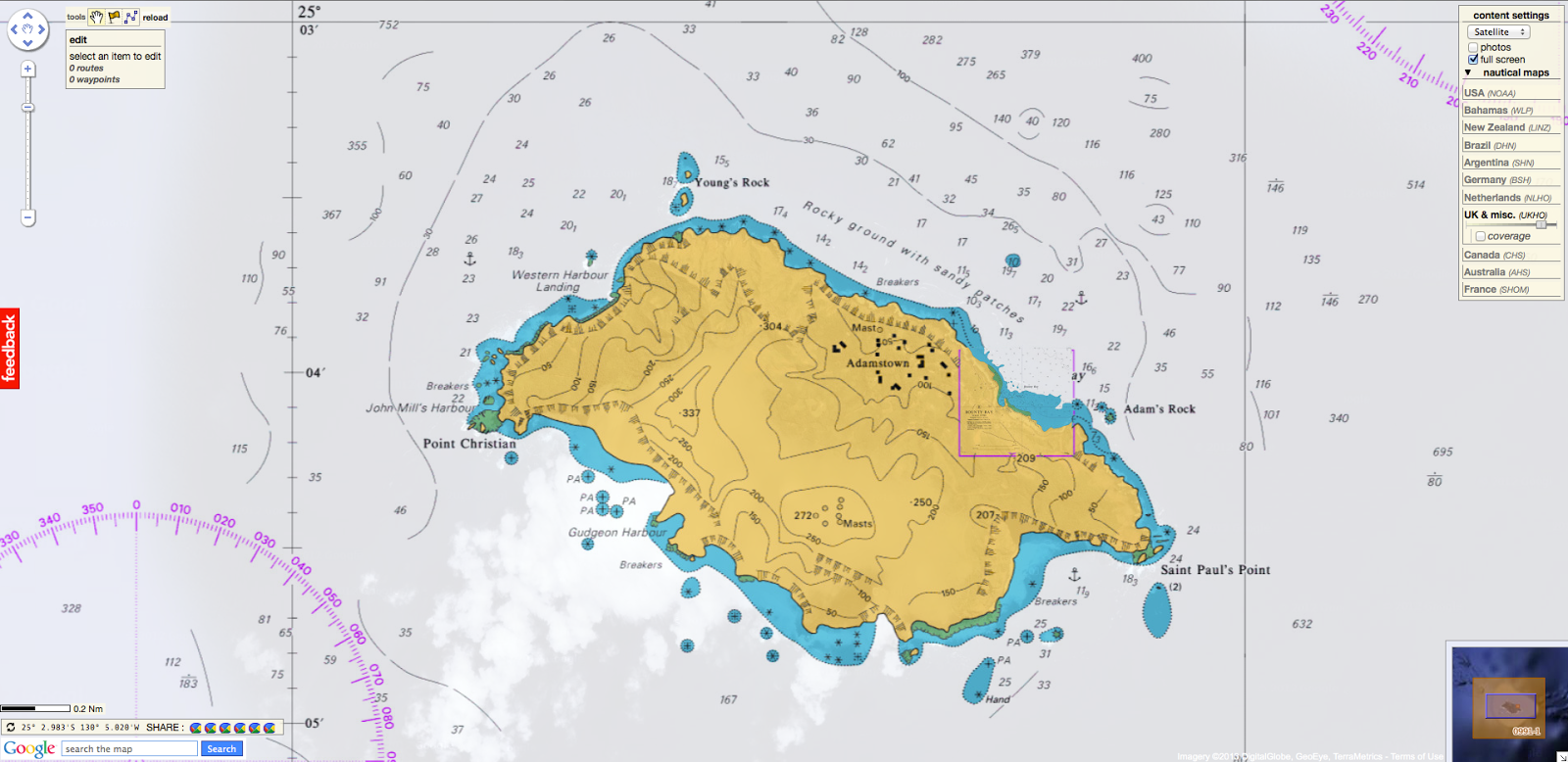
Because I have some of the best and well-traveled readers (and their relatives) in the compliance business, I have received a picture of a Pitcairn Island country of origin label. An anonymous reader had this jar of honey in a cabinet. So, compliance pros, what do you think of the marking? Does "Pitcairn Island, South Pacific Ocean" satisfy the U.S. Customs and Border Protection requirement for country of origin marking? Let me know what you think in the comments.

Ruling of the Week 2015.8: Old Jersey and Pitcairn Island

Image
For today's ROTW, I set out looking for a ruling dealing with some far off and preferably warm location. Turns out that, with the exception of coastwise transit issues, there are no Customs and Border Protection rulings involving Pitcairn Island or any of several Pacific Ocean microstates including Tuvalu , Niue , and Kiribati . Pitcairn Island What I did find is an interesting question about the country of origin marking for products of the Bailiwick of Jersey Island, Channel Islands. The ruling is HQ 561938 (Mar. 18, 2002). For those of you who may not know, Jersey is an island off the coast of Normandy, France. It is an independent international actor and not part of the U.K. although the U.K. is responsible for its defense and external relations. Also, the Queen is the Head of State in her capacity as "the Crown in Right of Jersey." It is, according to the U.S. Department of State, a " Crown Dependency " along with the Isle of Man and the Bailiwick o...

Quoth the Blogger, "Skidmore?"

Continuing my effort to catch up with the Court of International Trade and one decision of the Federal Circuit, we now come upon JBLU, Inc. v. US , a recent decision of the Court of International Trade. The issue in this case is whether wearing apparel from China bearing the brand-name "C'est Toi Jeans Los Angeles," "CT Jeans USA," and "C'est Toi Jeans USA" were properly the subject of a Notice to Mark or Redeliver for failure to have adequate country of origin marking. Customs and Border Protection maintains that the use of "Los Angeles" and "USA" on the labels requires the there be in close proximity and in comparable size a a country of origin marking preceded by "Made in," "Product of," or another similar phrase. This requirement comes from 19 CFR 134.46, The importer maintains that section 134.46 does not apply because the geographical designations are part of a trademark or trade name. That argum...

CBP: Crimea Country of Origin Remains Ukraine

So says U.S. Customs and Border Protection: CSMS #14-000236 Title: Marking Requirements for Ukraine Date: 4/23/2014 5:22:25 PM To: Automated Broker Interface In accordance with 19 United States Code (USC) 1304, every article of foreign origin (or its container) imported into the United States shall be marked in a conspicuous place as legibly, indelibly and permanently as the nature of the article (or container) will permit in such manner as to indicate to an ultimate purchaser in the United States the English name of the country of origin of the article. Growth, production, or manufacture of a good in Crimea is growth, production, or manufacture of a good in Ukraine. Goods which are the growth, product, or manufacture of Crimea and other areas of Ukraine should be marked as "Product of Ukraine" or "Made in Ukraine". If the container of the imported good is marked, it may be marked, "Contents made in Ukraine" or words similar ...

Marking Unassembled Products

Image
I do a lot of training talks for lots of organizations and I am happy to do so. One of my go-to examples for tariff classification is a complete bicycle imported unassembled in a retail box. This is a good way to discuss General Rule of Interpretation 2(a), which tells us that goods imported in an unassembled or disassembled condition will be classified as the finished article if, when imported, it is complete or has the essential character of the complete article. In my bike example, that means that the unassembled bicycle is classified as if it were assembled. What I don't usually talk about in the context of that example is the marking of the disassembled bicycle in a retail box. I am, however, thinking about that because Customs and Border Protection recently published a proposal to revoke the ruling NY N015337 (Aug. 23, 2007) in which it addressed the marking of an unassembled child carrier/seat for a bicycle. The proposal is in the Customs Bulletin starting at page 39 . ...

A Core Marking Question

It has been a while since I covered a Customs and Border Protection ruling. But, HQ H171035 is right in my wheelhouse of personal and professional interest. It concerns the application of NAFTA and non-NAFTA marking rules to used motor vehicle parts imported for remanufacturing. In the industry, these are called "cores."   It is important to note that the ruling does not address the NAFTA origin of or the entry requirement for the dirty core when imported. It appears from the ruling that non-NAFTA claims were involved. The ruling also does not address the origin marking on the outermost packaging of the dirty cores imported for further processing. Rather, it focuses only on the marking of the remanufactured parts, which are presumably sold in the aftermarket. For core from non-NAFTA countries, the applicable law is that the ultimate purchaser should be able to identify its country of origin from the marking on the imported goods. For this purpose, “country of...

Uniform Marking Officially Dead

Image
But, like a brain eater from Zombieland or the upcoming World War Z , it may be back. Remember, always double tap. Tomorrow, Customs will publish a Federal Register Notice making technical corrections to the Part 102 rules of origin and officially withdrawing the proposal that the U.S. implement tariff shift rules of origin for all commodities. The specific changes relate to pipe fittings and flanges, greeting cards, glass optical fiber, rice preparations, and certain textiles and apparel. If you import those goods, please check the FR Notice when it comes out. I am not giving a link because the link will to tomorrow's Federal Register will be dead tomorrow after the official version is published. Regarding the proposal to adopt uniform rules of origin primarily based on a tariff shift methodology, Customs reports that it received a total of 70 public comments, 42 of which expressed opposition to the July 25, 2008 proposal. As a result of these comments, Customs and Border Pro...