Posts

Ruling of the Week 2015.16: SCOTUS Edition

I'm falling behind on my goal of blogging a ruling a week. So, I am cheating and calling an action of the United States Supreme Court a "ruling," which it technically is. Yesterday, the Supreme Court denied the petition for certiorari in Shadadpuri v. United States . That means that the decision of the full United States Court of Appeals in Trek Leather  stands as the law of the land. Is this a terrible result? Probably not in that particular case. It appears that Mr. Shadadpuri was a bad actor in terms of customs compliance. But, the decision is not limited to bad actors. It means that anyone who provides information to Customs that is material to its handling of an entry is potentially liable for a penalty if that information turns out to be false by reason of fraud, gross negligence, or negligence. By anyone, I mean anyone. This applies to the importer, individuals who are employees of the importer, and third parties including brokers, carriers, sureties, and domes...

Happy Tariff of Abominations Day

May 19th is a holiday for customs and trade professionals. I know that because I declared it to be so. If you don't recall, read this post .

Ruling of the Week 2015.15: The Festive Penguin

Several alert readers have pointed me in the direction of the May 6, 2015 Customs Bulletin & Decisions in which U.S. Customs and Border Protection proposes to revoke NY N035321 (Aug. 18, 2008). In that ruling, Customs considered the classification of a 14-inch plastic penguin made of red, orange, green and clear beads. To make the item even more impressive, it is equipped with light bulbs that run through the frame and it wears a "Santa hat" made of lights. Stop there for a moment. As with my lighted tie , I have been unable to find a picture of this particular item. Note to anonymous law clerk who found me a representative tie: treat this as a challenge. Find me a picture, please. Customs originally classified this item in Heading 3926 as an other article of plastic. The importer asked for reconsideration of that decision and asserted that it is properly classified as a festive article in heading 9505. As you probably know, the scope of heading 9505 has been the sub...

Another Defeat for Customs Trolls

Do you remember the tale of Customs Fraud Investigations, LLC v. Victaulic Company ? If not, you should go back and read that post. CFI is an entity established to conduct research and analysis with the apparent goal of identifying customs fraud. The ultimate goal of which appears to be to profit by bringing False Claims Act cases against alleged fraudsters. Nice business model. In the case of Victaulic, CFI claimed that the company was not labeling its products consistent with the country of origin marking laws and regulations. While doing so, Victaulic also allegedly failed to notify Customs and Border Protection of the violation and deposit marking duties. As a result, according to CFI, Victaulic has committed customs fraud and, by making a false claim, deprived the U.S. government of lawful revenue. CFI claims it should be able to maintain a False Claims Act case on this basis and receive a portion of the revenue eventually paid to the U.S. As previously discussed, CFI based ...

Ruling of the Week 2015.14: The "Treatment" of Bicycle Seats

Image
Note, this is not another post about tariff classification. Read through the facts to get to the more interesting issue. How much controversy could there possibly be over the tariff classification of an add-on child safety seat for bicycles? Apparently, enough to general HQ H170637  (Feb. 11, 2015). Kent International imports the Wee Ride child safety seat that is designed to mount in front of the saddle on an adult bicycle. Here's what it looks like: Back in 2005, CBP issued a ruling classifying the Wee Ride as a bicycle accessory in 8714.99.80, subject to a 10% rate of duty.  Customs subsequently issued rulings to other importers classifying similar safety seats in 9401.80.40 as seats, which is a duty-free provision. Obviously, that gave competitors an advantage and probably annoyed Kent. Kent even got some protests approved on the basis of the subsequent rulings. However, Kent's subsequent entries were liquidated in 8714, forcing anther round of protests, wh...

Ruling of the Week: Missing Edition

Argh. I am a week and a half behind on my commitment to provide a post on a ruling each week. Sorry, that is the beauty and curse of litigation. Back soon and will catch up. The good news is that there have been no new CIT and CAFC customs-related cases to report.

Ruling of the Week 2015.13: Origin, NAFTA and Circular Reasoning

The NAFTA Marking rules are a giant mystery to many people. Let's assume you are importing evaporator cores from Mexico. The cores are initially produced in South Korea and shipped to the U.S. From here, they are exported to a facility in Mexico that adds fittings and connections before shipping them back to the U.S. Once back here, they are used in the assembly of automotive air conditioners. When returned to the U.S., the cores are not NAFTA originating. You can assume that set of fact because it is what happened in CBP Ruling N014917 (Aug. 2, 2007). So, how do you analyze the origin of the cores? The U.S. has various rules used to determine country of origin. Most products that are not wholly the growth or product of a single country are deemed to originate in the last country in which it was subject to a substantial transformation, i.e. , a change in name, character, or use. See 19 CFR 134.1(b). That section goes on to say " however, for a good of a NAFTA country, ...

Late Ruling of the Week 2015.12: Quiver

Image
If you read this blog regularly, you know I have a certain affinity for nerd culture and, in particular, comic book superheroes. For example, I very much like the CW incarnation of Oliver Queen's Green Arrow. I will admit that the Green Arrow books did not do much for me the last time I regularly read them. When I last checked in. Oliver/Green Arrow was fighting a mutant polar bear, or something. If you follow Arrow on the CW, you might also like the podcast Quiver , which is both an episode recap and general discussion of the Arrow TV show. Amanda and Mike do a good job of commenting on the specific show and on the larger Arrow-related universe. Sometimes, they go a little off the deep end of fandom and "shipping" various romantic angles, but their podcast is informative and entertaining. And, it is called "Quiver," which brings me to this post. As you likely know, a quiver is the device archers use to hold arrows. A company called Kinsey's Archery imp...

Ruling of the Week 2015.11: German Pizza, Chicago Pride

Image
This one is pretty straight forward. The only reason I am covering it is that the notion of importing completely prepared pizza from Germany is oddly funny to me. Kind of like getting tacos from Australia. In N261593 (Mar. 11, 2015), U.S. Customs and Border Protection answered a ruling request from Freiberger U.S.A., Inc. asking for the tariff classification of a completely prepared and frozen pizza to be imported from Germany. Four varieties were involved including: flatbread with cream sauce and eleven-inch square. The correct tariff classification is in Heading 1905 which is the heading for: Bread, pastry, cakes, biscuits and other bakers' wares, whether or not containing cocoa; communion wafers, empty capsules of a kind suitable for pharmaceutical use, sealing wafers, rice paper and similar products . . . . I come from Chicago where we like our pizza thick, the way God intended it. Consequently, it makes sense to me that pizza would be treated as a bread product. Sp...

Ruling of the Week 2015.10: Getting an iHandle on iLuggage

[UPDATE: It turns out that there is a reason for the ambiguity in the ruling discussed below. The ruling was not written for publication. It was inadvertently posted to CROSS. The "ruling" has now been removed. Hence, you should treat what follows as an interesting hypothetical discussion and nothing more.] Heading 4202 of the Harmonized Tariff Schedule of the United States sees lots of legal action for two reasons. First, the duty rates are very high; some as high as 20%. Second, U.S. Customs and Border Protection seems to find that many items go in these high-duty provisions. For context, Heading 4202 covers: Trunks, suitcases, vanity cases, attache cases, briefcases, school satchels, spectacle cases, binocular cases, camera cases, musical instrument cases, gun cases, holsters and similar containers; traveling bags, insulated food or beverage bags, toiletry bags, knapsacks and backpacks, handbags, shopping bags, wallets, purses, map cases, cigarette cases, tobacco po...

Ruling of the Week 2015.9: Do Court Decisions Matter?

We sometimes take it for granted that when the Court of International Trade or Court of Appeals for the Federal Circuit makes a determination on the tariff classification of some item, the decision matters beyond the specifics of the case. That, however, is not an obvious proposition or necessarily true. It is rare that the Court of International Trade will have two or more opportunities to decide the classification of exactly the same product, though it does happen. So, the direct impact of court decisions can be limited. Also, the Court of International is unique among federal courts in that the principal of res judicata does not apply in tariff classification litigation. As a result, an importer can lose a classification claim on its first entry and try again on its second, third, and fourth entries. Although the Court does apply the principal of stare decisis, under which it seeks uniformity in its decisions, one judge of the CIT cannot bind the decision of another judge...

Ladies and Gentlemen: Pitcairn Island Honey

Image
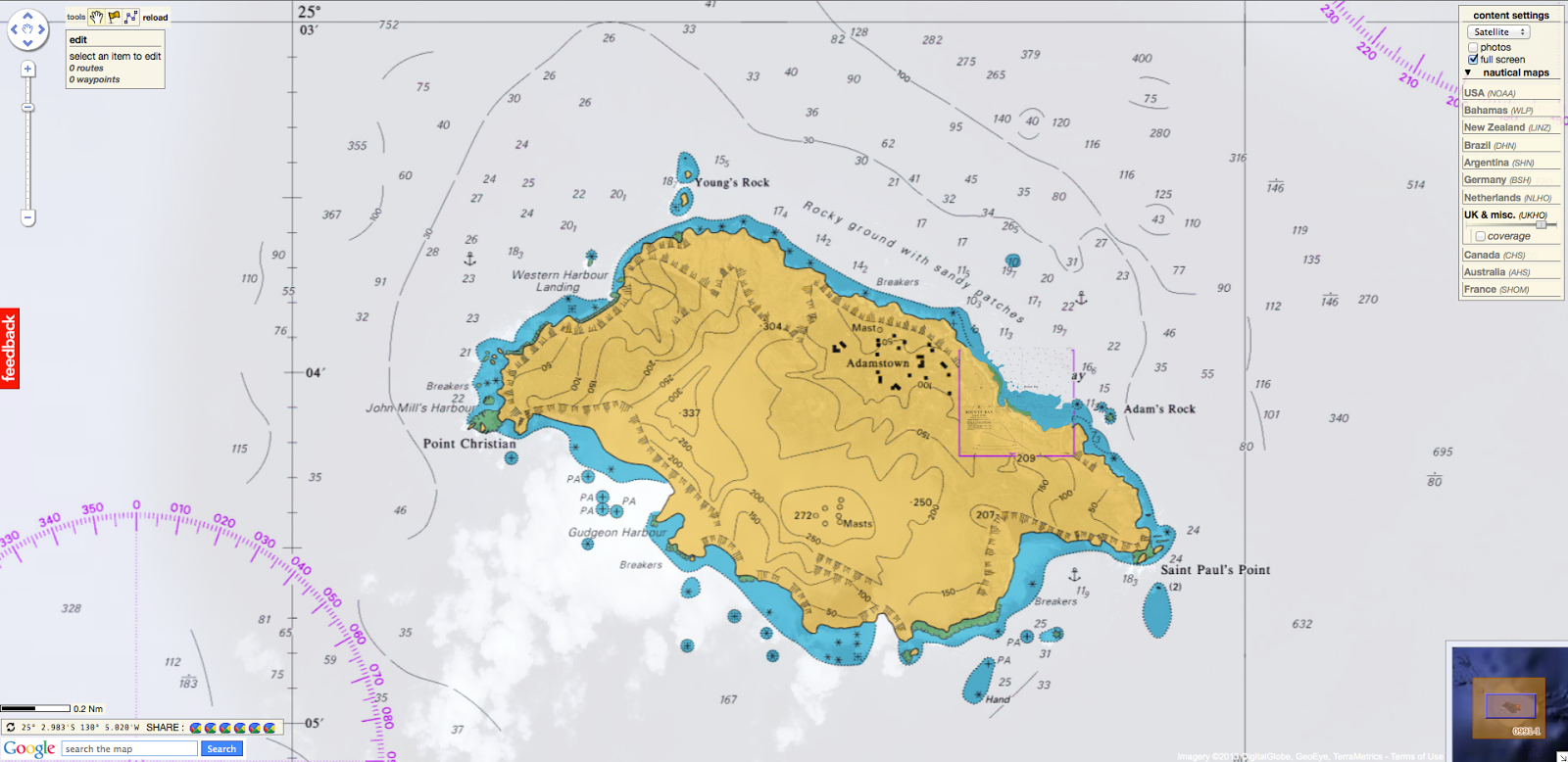
Because I have some of the best and well-traveled readers (and their relatives) in the compliance business, I have received a picture of a Pitcairn Island country of origin label. An anonymous reader had this jar of honey in a cabinet. So, compliance pros, what do you think of the marking? Does "Pitcairn Island, South Pacific Ocean" satisfy the U.S. Customs and Border Protection requirement for country of origin marking? Let me know what you think in the comments.

Ruling of the Week 2015.8: Old Jersey and Pitcairn Island

Image
For today's ROTW, I set out looking for a ruling dealing with some far off and preferably warm location. Turns out that, with the exception of coastwise transit issues, there are no Customs and Border Protection rulings involving Pitcairn Island or any of several Pacific Ocean microstates including Tuvalu , Niue , and Kiribati . Pitcairn Island What I did find is an interesting question about the country of origin marking for products of the Bailiwick of Jersey Island, Channel Islands. The ruling is HQ 561938 (Mar. 18, 2002). For those of you who may not know, Jersey is an island off the coast of Normandy, France. It is an independent international actor and not part of the U.K. although the U.K. is responsible for its defense and external relations. Also, the Queen is the Head of State in her capacity as "the Crown in Right of Jersey." It is, according to the U.S. Department of State, a " Crown Dependency " along with the Isle of Man and the Bailiwick o...

The Rolls Royce of Protests

What makes for a valid protest is one of those ever green questions that generates litigation before the U.S. Court of International Trade. The most recent entry in the parade of cases on this topic is Ovan International Ltd. v. United States . The background here is simple. Carriage House Motor Cars came into ownership in the U.S. of a 1958 Royce Silver Cloud. As will happen when one owns a classic car, Carriage House planned to sell it at auction in the UK. The car did not sell and was returned to Carriage House in the U.S. with Ovan acting as the customs broker and the Importer of Record. At the time of entry, Ovan claimed the entry should be duty free under HTSUS item 9801.00.25. Customs issued a Notice of Action stating its intent to liquidate the vehicle as a dutiable passenger car at 2.5% There was some back and forth between counsel for Ovan and Carriage House on the one hand and Customs on the other hand. On February 22, 2013, Customs liquidated the entry as dutiable and O...

Ruling of the Week 2015.7: When is a Porsche More Than A Car?

Image
I am late on this ruling of the week. I have been busy milking my Walking Dead posting, which got picked up by my friends at Law and the Multiverse.  But, as far as I am concerned, I have another couple hours to go in this week. And, since most of you are probably busy watching the Academy Awards, I will sneak this post on to the site and give it a Hollywood connection. This will be quick because there is not much law in this week's ruling. The ruling is  NY N254307 (Jun 11, 2014) . As you may know, rulings issued by the NY office of Customs and Border Protection often do not contain a lot of legal analysis. Given the short deadline and volume of requests, this makes sense. My guess is that whoever wrote this particular ruling is a car buff. He or she certainly expended a lot of language to find that this particular 1969 Porsche 917K is classifiable not as a passenger car but as a collector's item. That was probably a good result for the importer, because the car was ...

New US NAFTA CO Form

[Updated for clarity improvements.] Customs has updated the NAFTA CO Form 434, now with the date "11/14." The new form has some nice automated features to select dates. It is not immediately obvious, but when you click the field, you will see a drop down for a calendar. This should eliminate ambiguity as to dating formats (although I note that the printed date will be in U.S. mm/dd/yyyy format). The other innovation is that the contact information for the Exporter, Producer, Importer and signatory all have a space for an email address. This certainly seems like reasonable information for CBP to request. But, it raises the question of whether an importer can rely on a NAFTA CO that does not include an email address and whether CBP will accept it in the event of a verification. Yesterday, CBP issued a notice addressing that question. Below is the full text of what Customs and Border Protection had to say. Note the highlighted middle paragraph stating that forms without th...

Trek Leather Owner Seeking Supreme Court Reivew

Harish Shadadpuri, the principal of Trek Leather who the Court of International Trade and Federal Circuit held personally liable for corporate negligence, has asked the Supreme Court to review his case. This is one of the most interesting customs cases in a long time. Shadapuri was initially vindicated  by the Federal Circuit, which then reversed course and unanimously held he was liable as a "person" who "introduced" merchandise to the United States through negligence. This is the last chance for Shadapuri and the last chance for the law to recognize that while corporations may be people, and people are "persons" under the customs penalty law, the corporate people and liable persons are not necessarily the same. In most other cases involving personal liability for corporate acts, the government needs to show that the corporation was nothing more than an alter ego of the person. This is called "piercing the corporate veil" and is usually done u...

Ruling of the Week 2015.6 Human Remains and the Walking Dead

Image
Note, this has been updated to add a little more context for those among you who are not trade compliance professionals. Lately, I have been on a slow binge of watching the Walking Dead. Like most TV adaptations of graphic novels and comics, I am finding it very entertaining. I'm only in Season 3, so no one tell me . . . well, anything. As a result, I have been seeing a lot of images of corpses, both animate and inanimate. That reminded me that there is a specific provision in the Harmonized Tariff Schedule of the United States ("HTSUS") for the importation of corpses. The HTSUS is the statute (19 USC 1202) by which imported products are assigned rates of duty. It also sets out certain other regulatory requirements and exceptions. General Note 3(e), HTSUS, exempts from customs duties "corpses, together with their coffins and accompanying flowers." When goods arrive at a port in the U.S., they are usually subject to an "entry." That is the process...

Georgetown International Trade Update

Image
I'll be speaking at the Georgetown ITU again this year. By "speaking," I mean moderating a panel full of smart people. The topic will be principal use in tariff classification. This is not as mundane as it sounds. Identifying use provisions is getting murkier and evidence of use is not always readily available. The full two-day program features new developments in the area of international trade. Plan to attend Feb. 26-27 at Georgetown Law in Washington DC. Info is here .   

Best Key Overturned

With this post, I am momentarily caught up. Best Key Textiles Co. Ltd. v. United States has been a bit convoluted from the get go. The company makes, but does not import, metalized polyester yarns. It got a ruling from Customs and Border Protection that classified the yarn in HTSUS item 5605.00.90, which has a rate of duty of 13.2% ad valorem. Armed with this, Best Key got a second ruling on a "pullover garments" called a "Johnny Collar." Best Key's strategy seemed to be to confirm that it was making metalized yarn of 5605.00.90, which has a relatively high rate of duty, and then confirm that apparel made of that yarn would be subject to a relatively lower rate duty applicable to apparel of "other textile materials." Incongruously, Customs classified the Johnny Collar as being of polyester, thereby giving it a higher 32% rate of duty. Best Key requested that Customs review the Johnny Collar classification. In doing so, it also reviewed the yarn cl...